Case study · Men's grooming
Salt Grooming
Premium British haircare with products people loved and bought once. We rebuilt the machine behind the inbox, and the brand's biggest sales moments now run on returning customers.

- Klaviyo · Shopify
- Premium men’s haircare · UK
01 · Where they started
Loved once, bought once
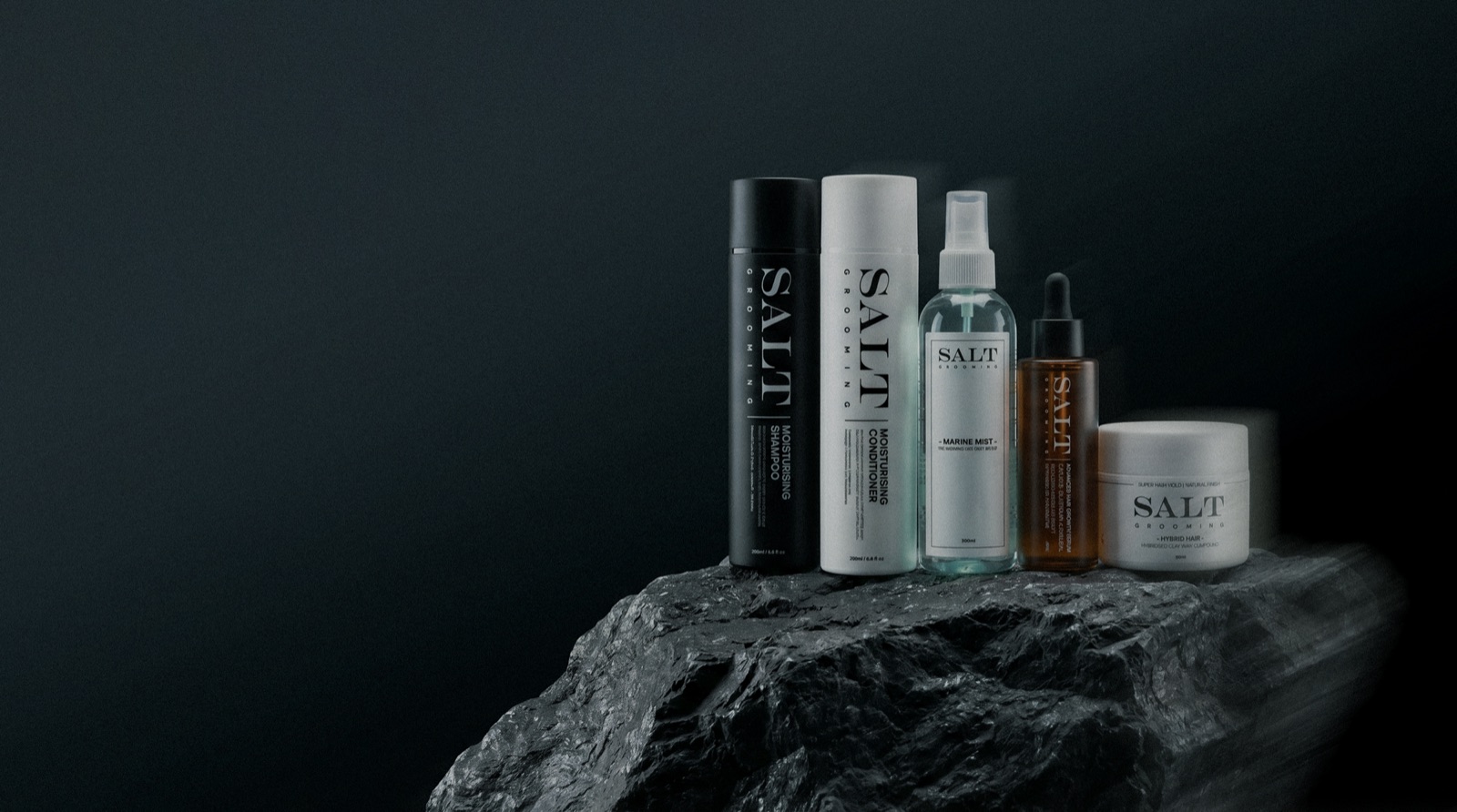
Salt Grooming was founded in 2018 to be, in its own words, the last haircare brand its customers would ever need: a small, obsessively formulated range of premium British men's grooming, years in development with cosmeceutical scientists, handmade in Britain. By 2024 the products had earned the loyalty part. The systems had not. Customers bought once, loved what arrived, and drifted, while growth leaned on paid acquisition to refill the top of the funnel.
Underneath, the email programme had not kept pace with the product.
The programme, mid-2024
- 59/100sender reputation score
- 20.8%of sends landing in spam
- Genericdiscount popup greeting everyone
- One messagefor prospects and loyalists alike
Campaigns talked almost exclusively about styling products to a list that included shampoo buyers, prospects and loyalists alike, and the flows sent the same message to a first-time visitor and a fifth-order customer. For a brand whose entire promise is discernment, the inbox had not yet caught up with the product.
02 · What we found
Fix the letterbox before the letters
The diagnostic started somewhere unglamorous: deliverability. There was no point writing better emails while one in five never arrived, so sender reputation came first, rebuilt through engagement-windowed sending and clean, mutually exclusive segments.
-
One list, several customers
Buyers were not one audience but several, each on a different journey: stylers, routine-builders, and a large, quiet segment worried about thinning hair. Nobody was being spoken to as who they actually were.
-
The most valuable customers were the least served
The product analysis showed the thickening range had the strongest repeat behaviour and long-term value in the catalogue, and almost no marketing addressed it. That one finding redirected the campaign calendar, handed the paid team its best-converting audiences, and ultimately fed the brand's own product roadmap.
-
A premium brand cannot discount its way to loyalty
Price integrity had to hold. So the offer structure split: prospects could see an incentive to start, but customers would be rewarded with free products at spend thresholds, never a cheapened repurchase.
03 · What we built
Built for the second order, then the tenth
The rebuild ran in the order the diagnostic set, starting the same summer the engagement began.
-
Deliverability, then the window after the first order. A full post-purchase suite shipped early: usage and onboarding emails per product, so a Compound Clay buyer learned to get the best from Compound Clay rather than being sold the next thing. Replenishment and a VIP winback followed close behind. The 30-day repeat purchase rate, the number this window moves, rose 24%.
-
Abandonment rebuilt as objection-handling. Site, browse, cart and checkout flows split prospect from customer at every step, justified the price and deployed the social proof. The first Black Friday ran as a code-gated early-access event, with a direct mail test reaching lapsed buyers email could not.
-
The front door changed. The generic popup became a hair-goals question and the welcome flow branched on the answer. Three downloadable guides gave considered buyers a reason to hand over an email address, and a hair quiz took it further: within hours of going live it was collecting addresses, and its answers now personalise everything downstream, from cross-sells to a predictive replenishment flow.
-
Compounding. A launch playbook carried new products to an audience finally segmented to care, with the hair growth serum landing the strongest engagement of its year. SMS arrived for the moments that justify it. Direct mail was productised as a winback channel. The list was pruned of dead weight, and every flow moved onto redesigned templates.



04 · The numbers
What it added up to
- +58% returning customer sales in 12 months
- +12% customer lifetime value
- +14% average order value
- +13% customers buying again the following year
- 59 → 80 sender reputation score, spam placement cut from 20.8% to 8.9%
- +132% campaign revenue
- 13.68x return on the Black Friday direct mail test
"The quality and attentiveness has remained consistent throughout, which I find is rare to come by these days."